
It’s a confusing moment in energy markets. International Energy Agency head Fatih Birol calls the closure of the Strait of Hormuz “the greatest energy security threat in history.” Energy markets are mostly shrugging it off, for now. Brent prices are up about 67 percent from $62 per barrel in early January, but are still well below (in real terms) the levels they reached during the 2022 energy crisis in the wake of Russia’s full-scale invasion of Ukraine. Are energy markets driving into a wall, or are concerns about the effect of the Iran war on global energy overblown?
It’s useful to think in probabilities. It’s possible that the crisis will quickly conclude on favorable terms. While this scenario would be welcome, experts such as Nate Swanson assess that Tehran believes time is on its side.
The balance of evidence suggests a continued crisis. Fundamentals and arithmetic will likely prove inescapable. About 25 percent of the world’s seaborne oil transits the Strait of Hormuz in peacetime, and other commodities including liquefied natural gas, fertilizer, sulfur, and helium face severe pressure from the conflict. The IEA estimated in mid-May that cumulative supply losses from Gulf producers already exceed 1 billion barrels. By September, at current rates, global stockpiles will be drawn down to their operational floors, with little buffer left for further shocks; data released yesterday by the US Energy Information Agency shows the fastest eight-week drawdown in modern US history. Oil rationing is an appropriate policy lever and is already occurring, in China and elsewhere, but cannot be sustained for long without severe economic pain.
While an energy crisis is not inevitable, the warning lights are flashing red. For two months, the US has punted on a hellish choice: find a nuclear-focused agreement with Iran or conduct an immensely costly full-scale operation designed to topple the regime, as Danny Citrinowicz wrote in March. But if oil prices are sharply higher by late summer, Washington will be forced to resolve the question.
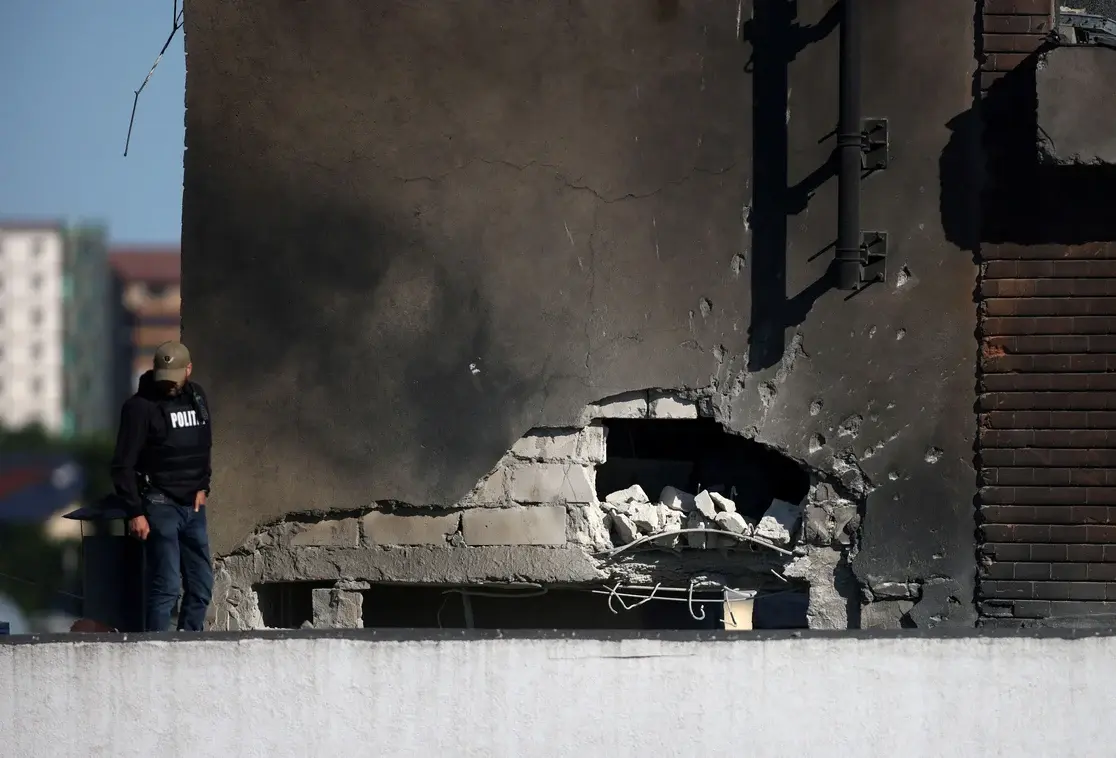
Kuwait summoned the Iranian charge d’affaires and ordered other Iranian diplomats to leave the country after an Iranian drone strike on Kuwait’s international airport killed one and injured at least sixty. Romania summoned the Russian ambassador and will close its only Russian consulate after a drone struck a residential building in Galati, injuring two. Washington is weighing whether to deploy nuclear-capable aircraft to additional NATO states beyond the six current host nations, with Poland and Baltic states expressing interest, reflecting growing appetite along NATO’s eastern flank for stronger capabilities to deter Russia.
Tressa Guenov, Senior director, programs and operations, and senior fellow at the Scowcroft Center for Strategy and Security, said:
“The Trump administration has couched a recent flurry of US posture changes as the start of a rebalance of capabilities with Europeans.
But US actions—such as pulling deployments and long-range fires plans from Germany—still feel unilateral rather than part of a grand plan.
Moscow is watching to see if these actions amount to the United States limiting its own options. Reduced or uneven conventional US presence in Europe could be Russia’s opportunity to further pressure NATO’s Article 5 commitment.
The United States and Europe can’t let that happen. US posture changes—conventional or nuclear—must be a precisely coordinated effort with allies so they can ramp up deployments and capabilities as the US draws down.”
Continued US attacks on Iran, combined with Israel’s recent offensive in Lebanon, led Iran to declare an end its official diplomatic negotiations with the United States, according to Iranian state media. US President Donald Trump claimed that peace talks would continue nonetheless. Bahrain and Kuwait condemned Iranian retaliatory strikes on Monday and Tuesday. In a visit to Pakistan, which has served as the main mediator between Iran and the US, EU High Representative and Vice President Kaja Kallas positioned the EU as a key interlocutor to ensure that the US-Iranian interim agreement becomes “durable.”
Gabriele Natalizia, Nonresident senior fellow at the Atlantic Council’s Europe Center, said:
“For Europe and the Gulf, the priority should go beyond preserving talks between Washington and Tehran and include a broader connectivity and maritime security agenda. This should connect Hormuz, where even the threat of disruption can raise insurance costs and affect oil, gas, and fertilizer flows, with the Red Sea, where Houthi attacks and fragile littoral states challenge freedom of navigation. However, in a future crisis, the most underappreciated factor could be China’s military presence in Djibouti. Alongside a possible second Russian naval foothold in Libya, it points to a more contested NATO southern flank. In this context, diversification, including overland routes for energy and digital cables envisaged by the India-Middle East-Europe Economic Corridor, becomes a strategic necessity.”
Abu Dhabi National Oil Company trading chief Philippe Khoury warned at a London industry conference that August could mark a threshold past which oil prices jump sharply higher if demand picks up and the supply crisis persists, adding that recovery could take a year even after flows normalize. ADNOC is simultaneously planning a new multi-fuel pipeline connecting Abu Dhabi to Fujairah to move gasoline, diesel, and jet fuel independent of the strait. Further west, Chevron has applied to take a 70 percent stake in a Greek offshore exploration block in the Ionian Sea, a signal of growing investment interest in Eastern Mediterranean alternatives.
Adel Hamaizia, Nonresident senior fellow at the Atlantic Council’s MENA Futures Lab, Rafik Hariri Center & Middle East Programs and Scowcroft Middle East Security Initiative, said:
“The bigger story is how governments and companies are adapting to a world in which disruption is becoming structural rather than episodic. Across the Gulf Cooperation Council and wider MENA region, the shift is increasingly from optimization to optionality, and from efficiency to resilience. ADNOC's planned multi-fuel pipeline is emblematic of this trend: Infrastructure is no longer being designed solely for efficiency, but for continuity, redundancy, and strategic flexibility.
This same logic is guiding a broader wave of investment across energy, logistics, transport, and digital infrastructure, as well as growing interest in the Eastern Mediterranean as a source of diversified energy supplies and alternative routes to market. In an era of persistent geopolitical uncertainty, resilience is becoming a strategic asset class, with governments and investors alike placing a premium on infrastructure that reduces single points of failure and creates multiple pathways for trade, energy, and data flows.”
The EU’s flash estimate of annualized inflation in the eurozone hit the critical threshold of 3.2 percent in May, following three consecutive monthly increases, driven in particular by rising energy prices. Based on these projections the European Central Bank is expected to raise interest rates over the next few weeks. Across the Atlantic, the projected first-quarter GDP growth rate for the United States was revised to a lower-than-expected 1.6 percent, with an expected cost per household amounting to almost $750. On the other hand, sovereign wealth funds from the Gulf countries reached almost $26 billion invested into developed market assets.
Charles Lichfield, Director of economic foresight and analysis and C. Boyden Gray senior fellow at the Atlantic Council’s GeoEconomics Center, said:
“As the European Central Bank tilts toward tightening into an energy-driven inflation print while US first-quarter growth disappoints at 1.6 percent, the 150-basis-point difference between the eurozone’s rate and the United States’ higher policy rates would normally be expected to narrow. The same energy-price surge underwriting eurozone inflation is also financing much of the roughly $26 billion that Gulf funds are channeling into developed markets so this provides some reprieve against a US slowdown. However, these funds will likely go to prioritize repairs to critical infrastructure as soon as there is enough clarity in the strait.”
The Europe Gulf Alert is produced by Kayra Sener, Jacopo Pastorelli, and Alex Elnagdy, and edited by Mary Kate Aylward.
For media inquiries, please contact: media@antenna-group.com
